Mandela
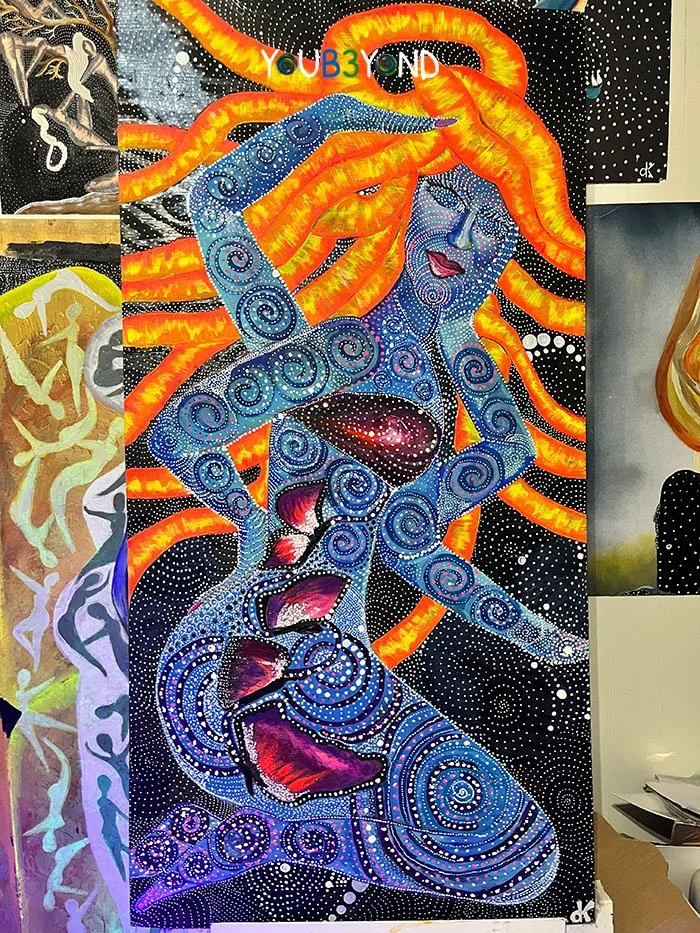
Kneeling with the future. She appears to be in deep thought while also unbothered by current or past events. She is draped in butterfly’s and swirls reflecting transformation and transmutation. She gazes upon on lookers with adoration and grace.
She is both the giver and receiver. She and I shared laughs, tears, rest, pain, joy, and many other feelings as she came to her self and me too.
She has allowed me to release all other versions of myself within her, as I emerge from myself into this "life"!
We are the dreamer....
We are God-experiencing all of creation
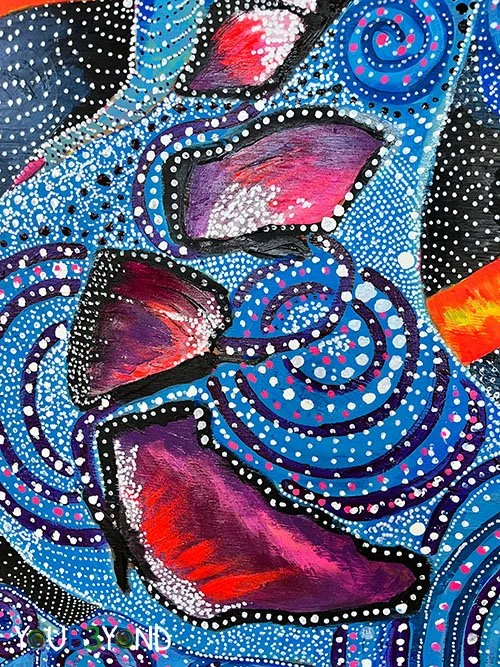
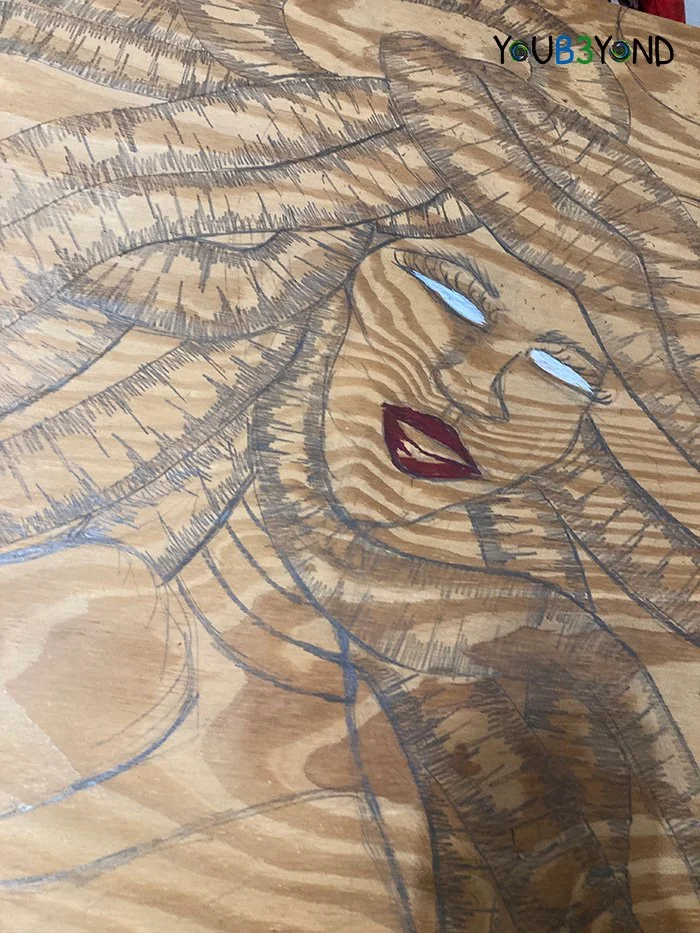
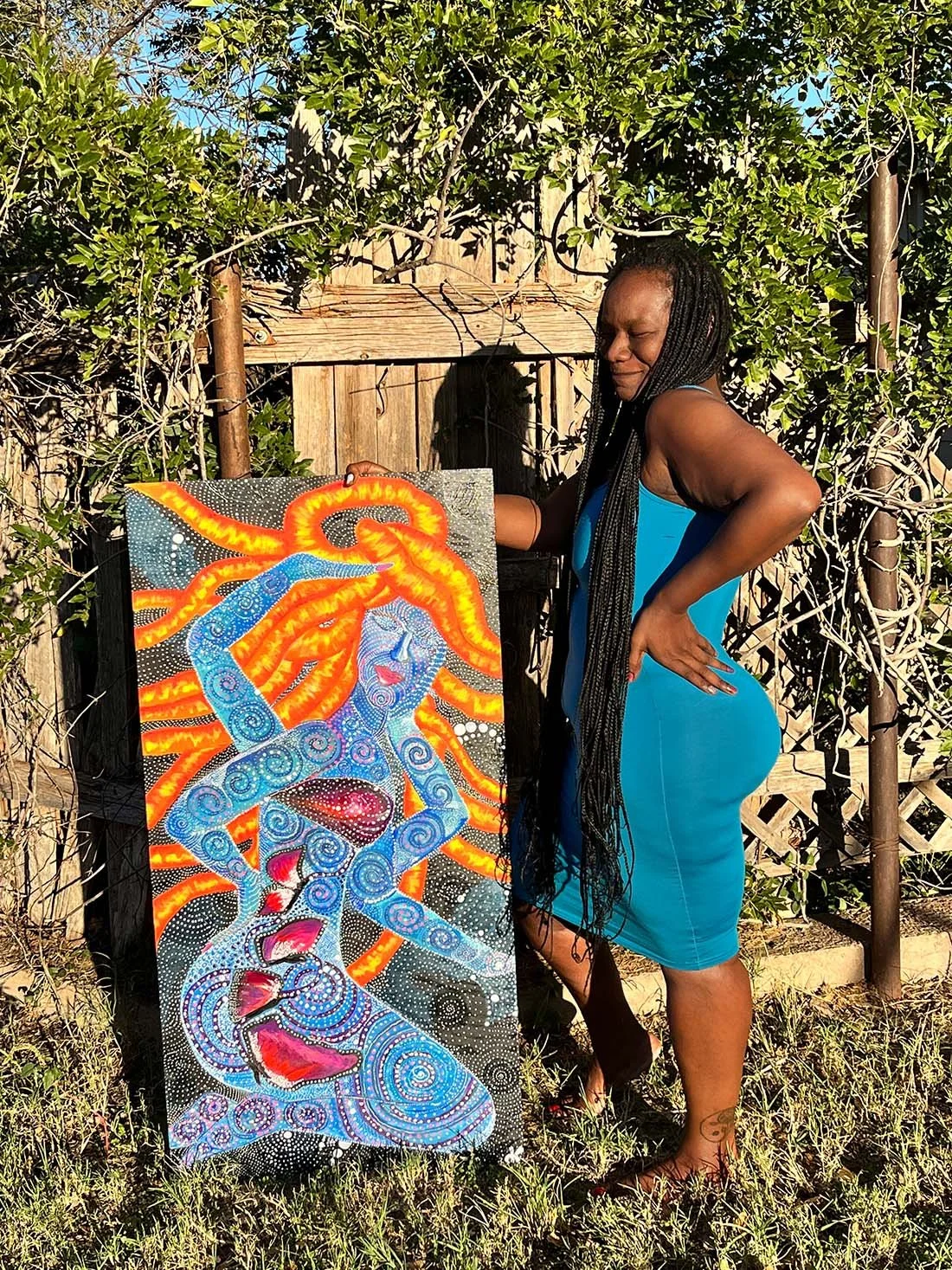
Mandela is an acrylic painting rendered on scrap plywood, employing pointillism, a technique in which distinct dots of color coalesce into imagery when viewed from a distance. This method adds a tactile texture and visual rhythm, emphasizing the labor, patience, and meditative state involved in its creation. The use of reclaimed wood reflects a philosophy of transformation—of turning something discarded into something sacred.
At the heart of the painting is a blue sentient female being, depicted with four arms, a symbol commonly seen in Eastern iconography that denotes multidimensional capacity, divinity, and balance. Her kneeling posture implies humility and reverence, while her gaze—serene, knowing, and loving—invites the viewer to experience both intimacy and awe.
Mandela’s fiery long locks stream with energy and life, signifying her dynamic spirit. Fire here could symbolize purification, passion, and the life force of creativity. The butterflies and swirls that adorn her form signify transformation, growth, and the cyclical nature of existence. Their presence suggests that she is not merely observing transformation—she is transformation.
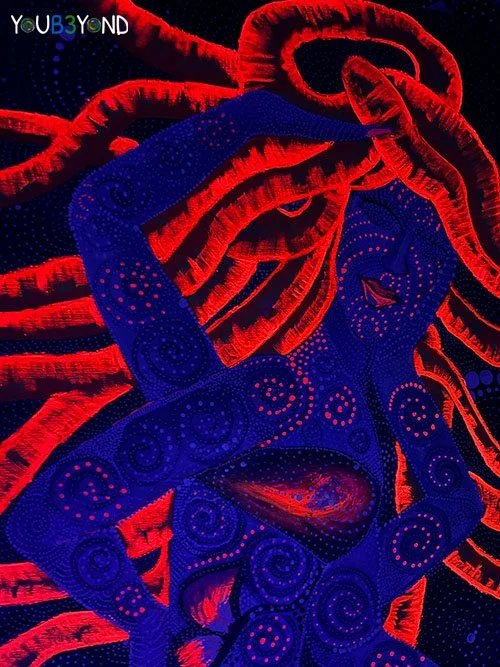
This being is a vessel—both giver and receiver, a living mandala holding within her the multitudes of life and emotion. The figure appears as a spiritual avatar or projection of the artist’s higher self, or perhaps a guide met during a deep state of introspection.
The painting process served as a meditative, therapeutic ritual where we were able to release past versions of the self into Mandela as she is also a repository for past identities, and possibly even a portal through which the future self may emerge. The artwork becomes a mirror and a cocoon—one that reflects who we are, while sheltering who we are becoming.
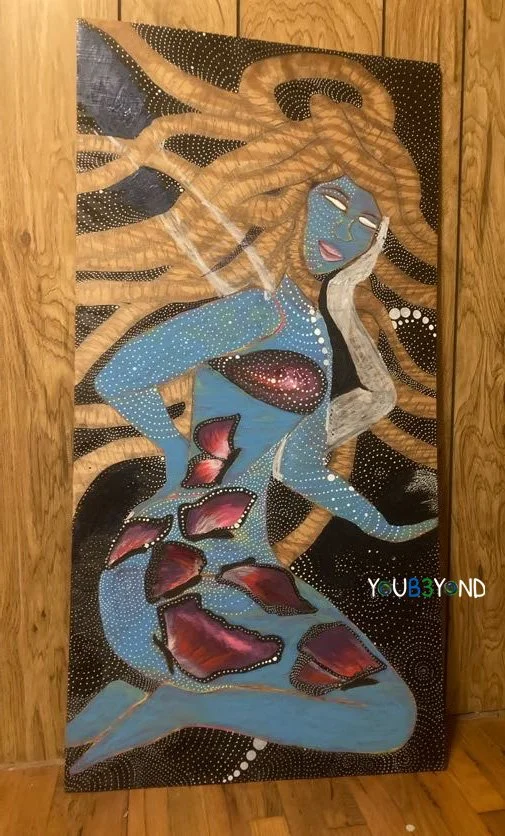
The tone of Mandela is one of healing, rebirth, and transcendence. The painting embodies the idea of the divine feminine, wisdom, and surrender.
This painting shifts from a personal journey to a cosmic meditation on consciousness itself. The being depicted is not only our inner reflection, but also an archetype of universal energy—God dreaming creation through and as us.
Mandela is a profound meditation in pigment. A spiritual record of personal evolution, divine connection, and healing. Its form, created through the slow, deliberate layering of dots, parallels the inner work of self-discovery. In sharing this piece, we offer not just a visual experience, but an energetic one. It is a visual prayer, a transformational talisman, and a witness to the sacred act of becoming.